Beef Tallow Skin Care: Is it Safe?
Is Beef Tallow Good For Your Skin?
You may have heard some people talking about using Beef Tallow skin cream. This may seem like a weird trend, but are there any benefits to using it? What are the risks? Can you find it in Ontario?
Beef tallow is a fat produced from cooking down, or rendering, the fat that surrounds the organs of a cow. Many people use it for cooking, but recently it has gained popularity as a skin-care product. You might think this is a little strange, but this was actually a common practice among our ancestors. In the middle ages, many people made tallow-based soaps to heal skin ailments. In addition, Native Americans used animal fats like tallow to protect their skin from bug bites and harsh elements.
Some influencers may suggest using actual beef tallow on your skin, however, the safest practice is buying specially formulated skin cream which uses beef tallow as an ingredient.
Does Using Beef Tallow as Skin Care Work?
Using beef tallow in skin cream has its benefits, it contains nourishing fatty acids and essential vitamins that deeply moisturize the skin, and soothe conditions like eczema, psoriasis, and diaper rash due to its anti-inflammatory properties. It mixes well into creams and balms without adding toxins. This makes it perfect for tackling different skin issues naturally.
It's like feeding your skin the nutrients it needs to stay hydrated and elastic. Grass-fed beef tallow stands out because it's loaded with Vitamin E, which is famous for its antioxidant properties.
Dr. Anil Sharma, a dermatologist with Sharma Skin & Hair Surgery, says: using beef tallow on your skin could be beneficial in some specific cases.
"Due to its make-up, beef tallow closely mimics the skin’s natural oils,” said Sharma. “Its natural and lipid-rich composition can make it an effective moisturizer and healing agent for those with eczema-prone or extremely dry skin.”
Tallow’s essential fatty acids and antioxidants can also be helpful with inflammation, he said.
“If you have eczema-prone or extremely dry skin and are curious to try this trend, I recommend starting with a small amount — a penny-sized portion — applied to both elbows and knees after your evening shower.”
The best thing to do is test it out yourself. If it does not help, stop using it. However, you might find it's actually quite beneficial. You'll never know until you try!
What Can You Find in Our Store?
Hide & Quill
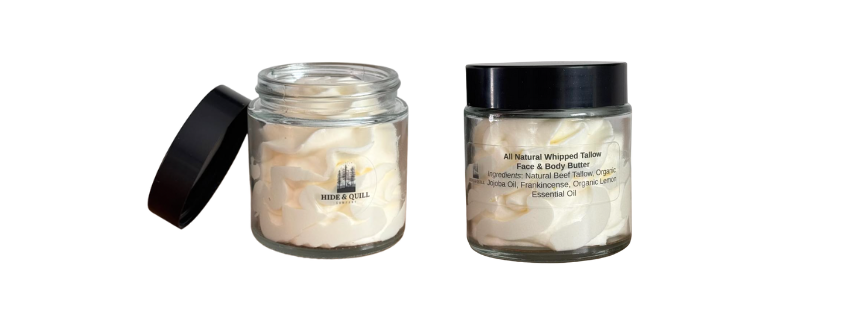
Hide and Quill, from Addington Highlands, Ontario, makes tallow balm to be used on the face and body. Their Whipped Tallow face and body butter can be used on your whole body and is mixed with Jojoba oil, Frankincense and Organic Lemon oil for increased benefits.
Our Two Acres
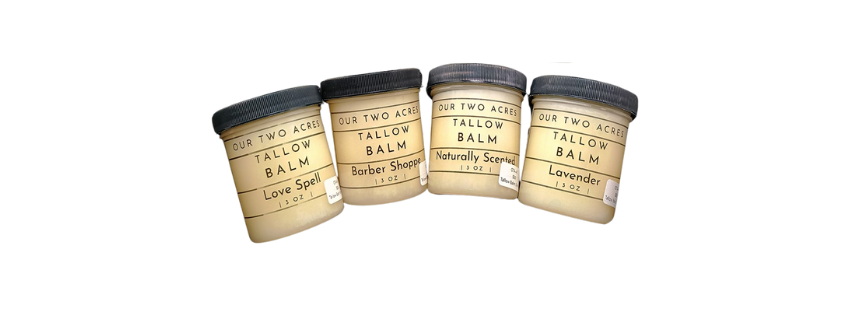
Our Two Acres, from Roseneath, Ontario. Similar to Hide & Quill, they use tallow as an ingredient, along with other beneficial oils and nutrients, which are formed into smooth and satisfying balms that may help clear up many skin ailments. Our Two Acres has several different tallow options ranging from sensitive skin to combination skin to mature skin. We also carry their lip balms!
Conclusion
Using beef tallow as a skin cream has several benefits, including nourishing fatty acids and essential vitamins that deeply moisturize the skin. However, it may not be for everyone since it can make your skin more sensitive to sunlight and is an animal byproduct. The best way to find out if it works for you is to try it out yourself. Come by either one of our locations for expert advice on how to use Tallow Skin Cream effectively.