Manuka Honey Explained: MGO, UMF and What The Numbers Mean
What is Manuka Honey?
You've probably seen the wide variety of Manuka Honey products that we carry in the store. But you might not know what Manuka Honey is or what it does, or any of the other stuff associated with it.
That's why we're going to break down what it is, how it can benefit you and go deep into the details on the differences between the products we carry.
Manuka honey is a unique, dark honey from New Zealand and Australia. It is made by bees pollinating Manuka bushes (indigenous to the NZ region) that are valued for their strong antibacterial properties. It has a distinct earthy flavour and is used for healing wounds, soothing throats and boosting overall wellness.
What are the Benefits?
Manuka honey offers benefits like powerful antibacterial, anti-inflammatory, and antioxidant effects, primarily due to its high Methylglyoxal (MGO) content. This makes it excellent for wound healing (including burns and ulcers) by preventing infection and promoting tissue regeneration, soothing sore throats and supporting digestive health.
What is MGO?
MGO stands for Methylglyoxal, a natural compound responsible for its potent antibacterial and antioxidant properties, with the number (e.g., MGO 100+, 400+) indicating the concentration (mg/kg). A higher number means stronger therapeutic effects, used for everything from daily wellness (lower MGO) to targeted immune support or wound care.
What is UMF?
UMF (Unique Manuka Factor) is a certified grading system that verifies its authenticity, purity, and potency, measuring key compounds like MGO (Methylglyoxal) for antibacterial power, ensuring you get genuine honey with powerful health benefits. The higher the UMF number (e.g., 10+, 20+), the stronger its antibacterial properties, making it popular for wellness, digestion, and skin health.
What does Monofloral and Multifloral Mean?
Monofloral Manuka honey means it comes predominantly from the nectar of the Manuka flower. Whereas, multifloral means it comes from a blend of many flowers.
What does KFactor Mean?
KFactor is Wedderspoon's own scale for explaining floral source and purity. They have two distinctions, KFactor 12 means the honey is multifloral and KFactor 16 means its monofloral.
What Does CRU RAW Mean?
CRU Raw is another term used exclusively by Wedderspoon. It means that the honey is minimally processed and never heated above levels that would significantly alter its natural enzymes.
Why Some Companies Don't Have A UMF Label
Manuka honey jars may not have a UMF rating because the UMF label is a certified trademark that requires producers to be a paid member of the Unique Manuka Factor Honey Association (UMFHA). Brands that do not join the association are not permitted to use the UMF logo or rating system.
Blended Honey products cannot be UMF certified.
How to Scan An NFC Touchpoint
Many of these products have an NFC Touchpoint on the label which you can scan to get more detailed information and info on how and where it was packaged. You can scan these with your phone, but they don't work the same as QR Codes.
Luckily, there are a few YouTube videos that explain how to do this:
iPhone:
https://www.youtube.com/watch?v=CvYx5_2P_PU
Android: https://www.youtube.com/watch?v=crMBqUGKhO0&t
What the Products Say
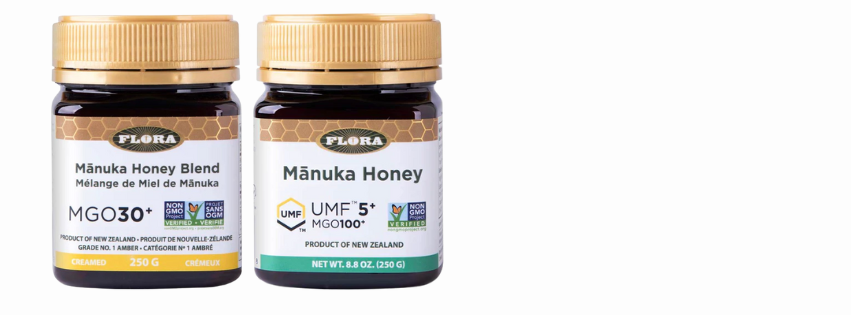
Flora has two Manuka Honey products, let's go over the differences between the two.
Manuka Honey Blend
This is different than regular manuka honey, it is a blend with some other honeys mixed in. This is called multifloral (mixed with other NZ bush honeys).
It also has the label of MGO 30+, which means it contains methylglyoxal, a compound with antibacterial and antioxidant properties. The rating is 30, indicating that it is not as strong as the brands with 100, but still effective.
It has no UMF Certification because blended honey products cannot be UMF certified.
Manuka Honey
The other is regular Manuka Honey, with no added blends. This is called monofloral.
It has an MGO rating of 100, meaning it is much stronger in methylglyoxal than the Manuka Honey Blend which only has a rating of 30.
It has a UMF rating of 5+, which is the entry-level grade within the UMF system for certified manuka honey. Higher UMF ratings indicate greater concentrations of naturally occurring manuka markers, but all UMF-rated honeys meet the same authenticity standards.
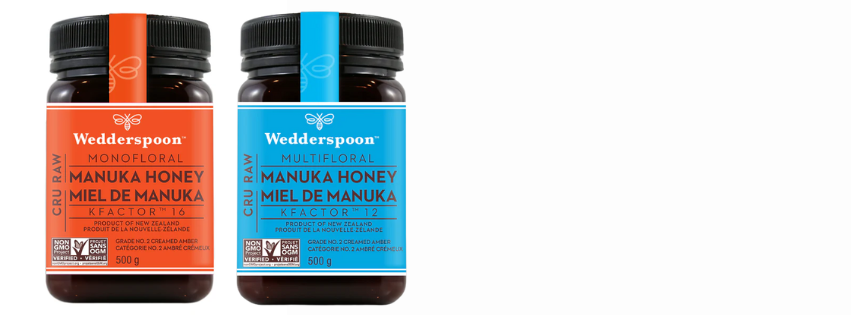
Wedderspoon also has two Manuka Honey products. Let's break down the differences.
Wedderspoon Monofloral KFactor 16
This Manuka Honey is monofloral, which means it comes from mostly the Manuka Flower. This results in a higher purity of Manuka which some describe as richer and more characterful.
Wedderspoon Multifloral KFactor 12
This Manuka Honey is multifloral which means the honey contains manuka flower plus a variety of other nectar sources.
Which One Is Best For You?
Multifloral is generally considered better for everyday use. It is not as strong and overpowering as monofloral, since it has different honey sources in it, resulting in a more diverse flavour. Most use this honey to add to their tea, yogurt, toast or baking.
Monofloral appeals to those who specifically want honey that’s mostly manuka rather than a blend. It is often described as richer, earthier and more distinct.
Generally speaking, higher MGO and UMF scores indicate higher concentrations of the compounds associated with manuka honey’s antibacterial and antioxidant activity, which is why higher-grade manuka is often chosen for therapeutic-style use.
Choose whatever works best for you!
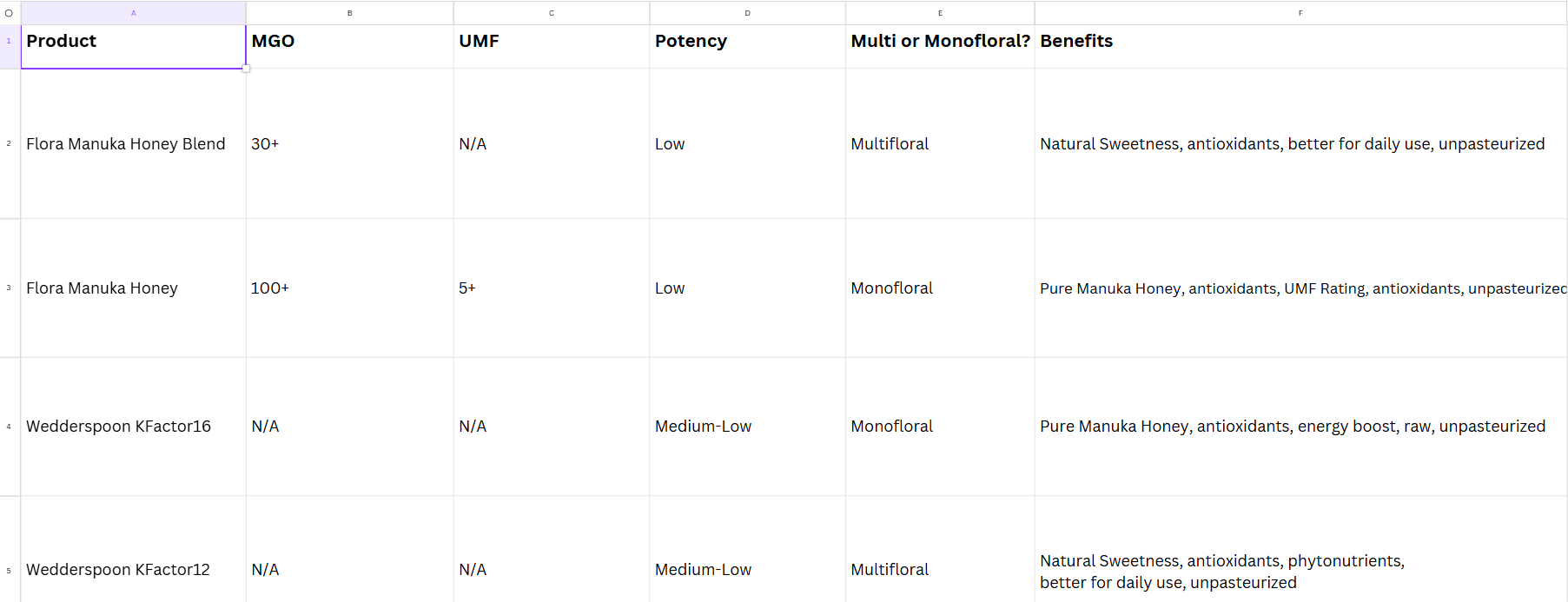
UMF/MGO Chart
We've created a chart that breaks down all of our Manuka Honey products, their benefits, and MGO and UMF scores.