The PRAL Table

The PRAL Table: Understanding Acid-Alkaline Balance in Your Diet

PRAL stands for: Potential Renal Acid Load and it measures the amount of acid from foods that kidneys have to deal with.

All foods have an acidic or alkalizing effect in the body, but it is crucial to know whether your diet is more acidic or alkaline, as having too much acid is linked to chronic disease and bad health. Current Western diets are characterized by a high DAL (dietary acid load), due to large amounts of animal protein and processed foods. A chronic low-grade metabolic acidosis can occur following a Western diet and is associated with increased morbidity and mortality


Many scientific studies have validated the accuracy and usefulness of the PRAL Table in estimating the acidic load of any given diet. Additionally, it has been found to help individuals reach more nutrition goals.


The PRAL allows us to analyze  our acid intake and take the appropriate steps to include more alkalizing foods and supplements, if necessary. It is not a diet but a guide for you to determine your acid/alkaline balance.


How the PRAL Table Assesses Dietary Acid Load


If we are eating a highly acidic diet, it will effect our kidney's ability to excrete the acid. This type of imbalance has been linked to poor health and chronic disease if it goes on long-term. Lowering dietary acid load has been studied for its impact on lowering the risk of kidney disease.

Guidelines to using the PRAL Table


- The PRAL Table is a guide to assess the general acidity/alkaline nature of someone’s diet; it is a not dietary plan.

- Values listed on the PRAL Table are based on 100g of the food.

- Values can vary due to cooking methods, food variety, growing conditions, season.

Balancing Your Diet: Aiming for Optimal PRAL Levels


1. Calculate the total grams of each food.

2. Compare to the PRAL Table, which is based on 100 grams, to find an approximate PRAL value for each food.

3. To get the total PRAL value of the meal, add up all the acidic values, and then minus all of the alkaline values, marked with a minus (-).

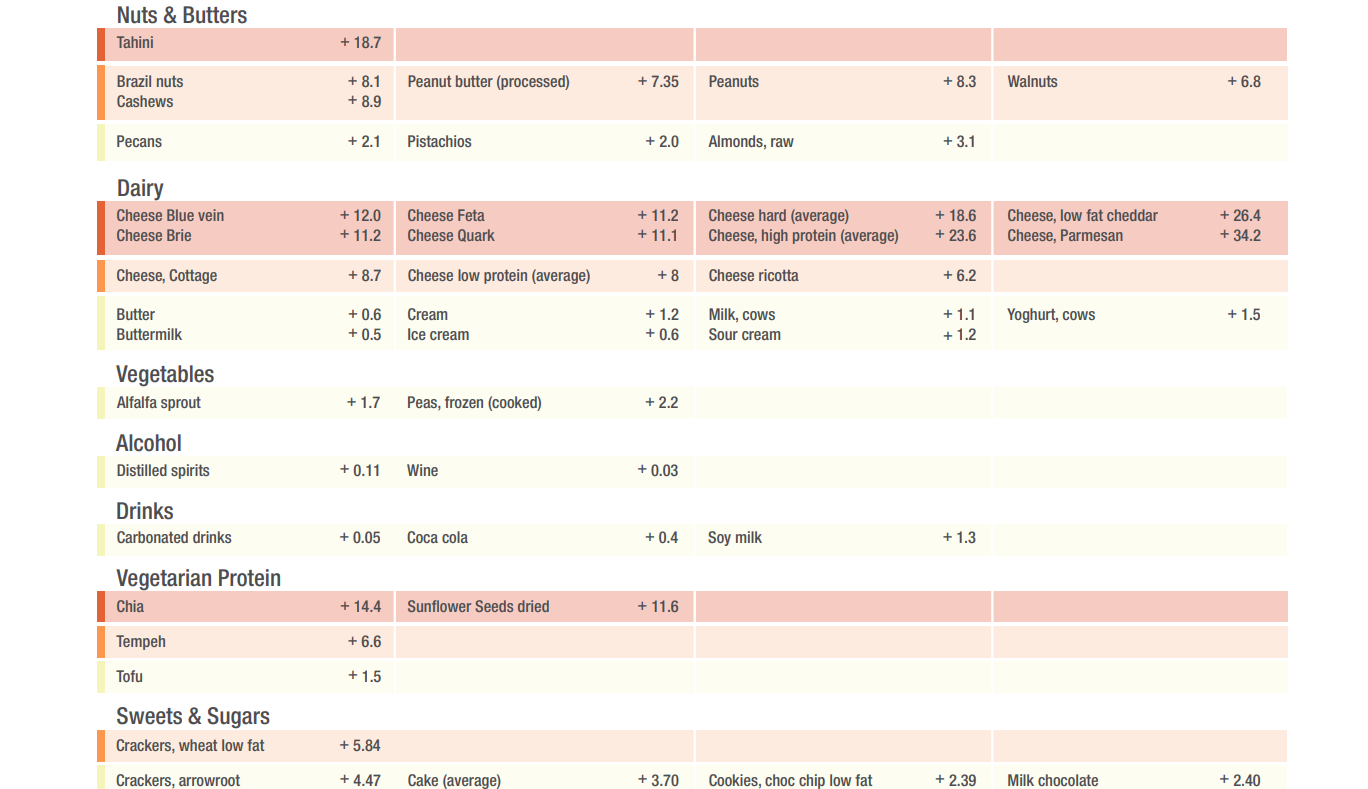
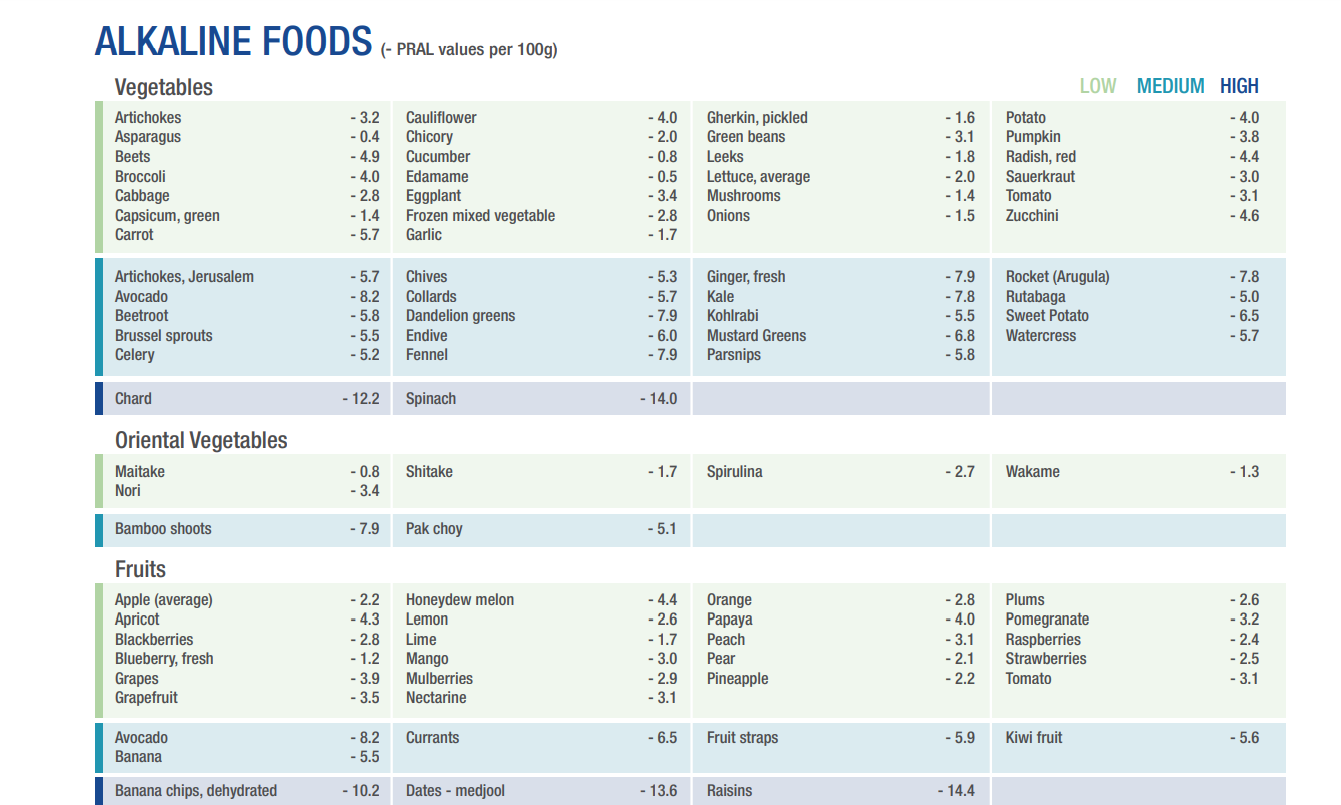
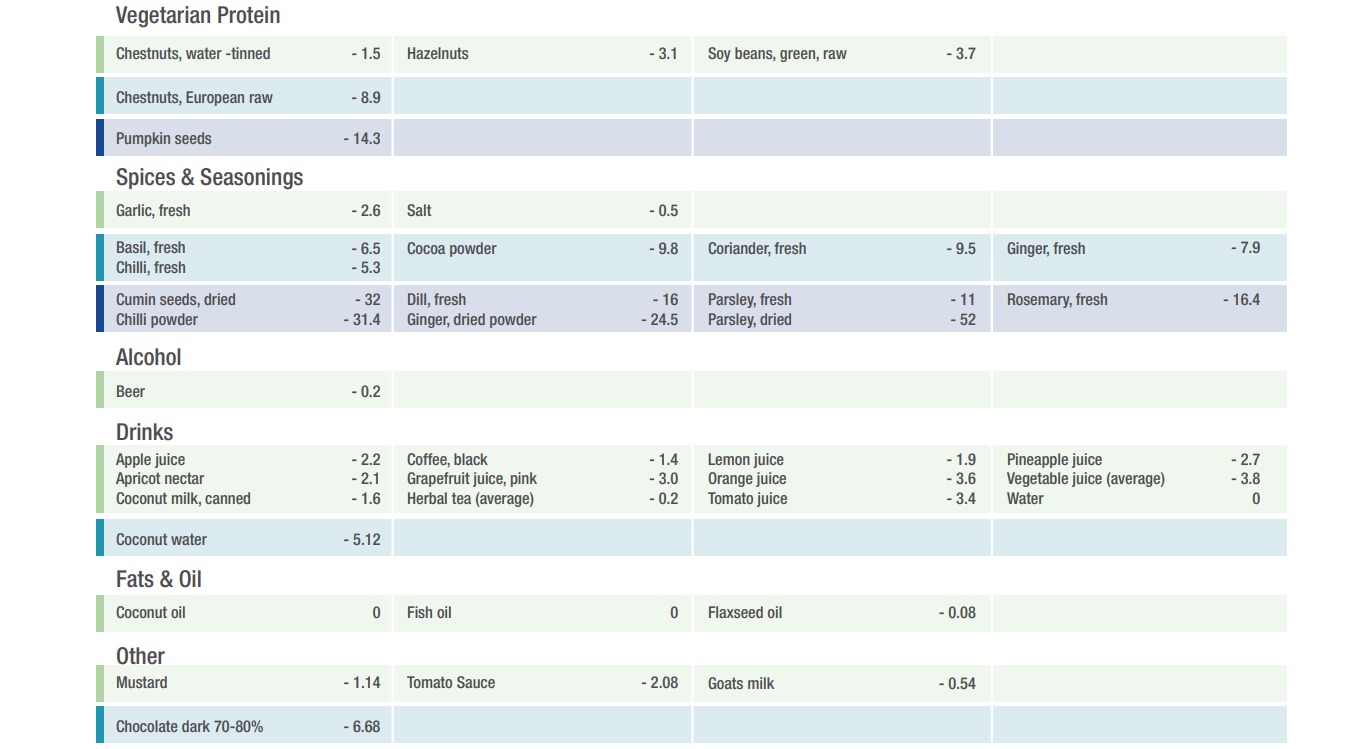
4. The final is the approximate PRAL value of the meal. Please see the example below, which shows that overall this meal is acidic (having an overall positive PRAL value) and could benefit from adding more alkalizing foods, like fresh greens. 


You can also use the PRAL Table as a general guide, without calculating the PRAL value. By using the coloured areas as a guide you can choose a balanced diet aiming for 1/3 of acid and 2/3 alkaline forming foods and drinks. Remember an acid food is not a bad choice. Choose an acid food as your main protein source, then balance it out with a greater selection of alkaline foods.

PRAL Table
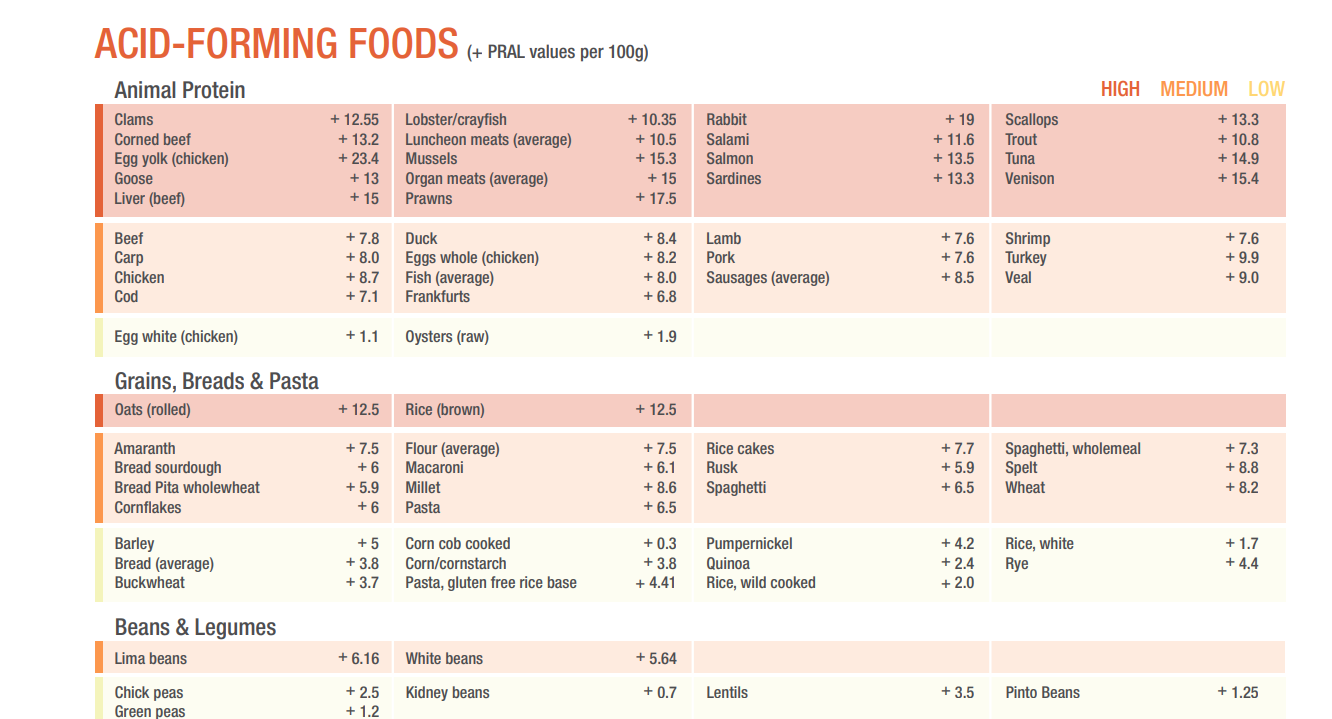
A table displaying what foods are the most acid forming
Part two of the acid forming chart
A chart that displays the Alkaline level in certain foods
Part two of the Alkaline forming food chart
Download The PRAL Table Here
By Jonathan Tessier April 29, 2026
Most candy and processed food products aren't naturally made with bright colors. They achieve that color by using synthetic food dyes. But are they safe for you?
floral pattern
By April Allen April 28, 2026
Mother's Day gifting made easy at Jo Anne's Place!
By Jonathan Tessier April 9, 2026
Peptides are short chains of 2 to 50 amino acids that act like messengers telling your body what to do. Some are effective, some are not. Let's get into all of it!
3 Pictures, on the left are sugar cookies, in the middle are cupcakes and on the right is a quiche
By April Allen March 31, 2026
Happy Easter! Looking to switch it up and try some new recipes this year? Here is a roundup of Easter
By April Allen March 25, 2026
Small Changes with a Big Impact. April is Earth Month! With Earth Day coming up on April 22nd, we wanted to share some simple ways to make your home more eco-friendly. Of course, sustainability is top of mind this time of year - but our hope is that the awareness around sustainability and habits created during Earth Month will be continued on throughout the year. Not only do sustainable habits benefit the Earth and the ecosystems we inhabit, but they also improve our lives by reducing waste and toxins in our homes and communities, saving us money, and supporting a more circular economy. Below are some small changes you can make to your daily routines that result in a more eco-friendly home:
By Jonathan Tessier March 5, 2026
For almost every junk food, there’s usually a healthier alternative. You might have to compromise on taste but its definitely worth it for health in the long run!
Jo Anne and Margo sit outside with their arms around each other
By April Allen March 3, 2026
Who run the world? Girls! March is Women's History Month, and March 8th is International Women’s Day. What better time than this to lift up the women around us!
Title: Top benefits of Fiber: Digestion, Weight Loss and Heart Health
By Jonathan Tessier February 26, 2026
From improving your gut microbiome to reducing cholesterol and supporting weight loss, fiber plays a crucial role in your overall health. How Fiber Improves the Gut
Rebecca holding green smoothie in a glass cup with a straw
By April Allen February 26, 2026
Celebrate the luck of the Irish with these festive, healthier St. Patrick's Day recipes! We've added some brand new recipes to the list for 2025 - Slainte!
Title: The Truth About GMO's. 
The graphic shows a strand of wheat and an ear of corn brought together by DNA
By Jonathan Tessier February 5, 2026
You've probably heard about GMO's, but do you know what they actually are? They sound scary, but it's actually really easy to understand once you break it down.